
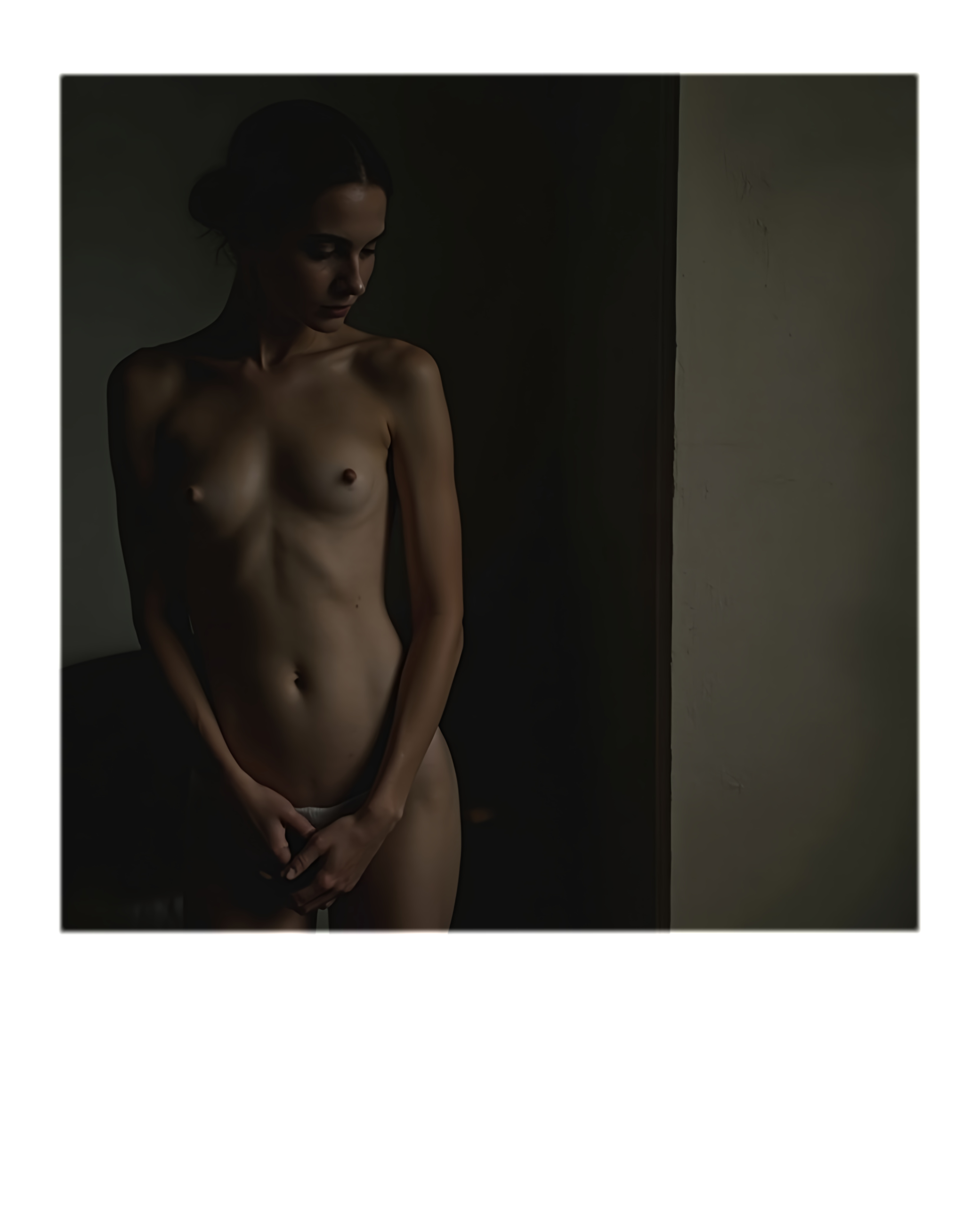
At some point, the body stopped being something you lived in
and started becoming something you managed.
It wasn’t announced. No one explained when the shift happened. It arrived quietly, disguised as awareness. A sense that being seen required preparation. That desire had an audience. That presence needed polish.
The rules had already been absorbed.
Images had taught what was expected. Morality had taught what was allowed. Visibility had taught what would be noticed. And somewhere in the overlap of all three, the body learned that existing wasn’t enough anymore.
It needed to do something.
Movement became intentional. Posture adjusted. Expressions softened or sharpened depending on who might be watching. Even when alone, the body carried an invisible witness — an imagined lens, an imagined judgment, an imagined response.
This wasn’t confidence.
It was calibration.
Performance didn’t mean exaggeration. It meant correction. Small adjustments made constantly, often unconsciously. A way of staying ahead of rejection. A way of appearing effortless while working very hard to be acceptable.
The body learned timing. Learned angles. Learned restraint. Learned when to offer itself and when to disappear. Desire became something to present correctly, not something to explore freely.
What made this especially difficult to notice was how normal it felt.
Everyone was doing it. Everyone had learned the same cues. The performance didn’t feel like pretending — it felt like survival. Like adaptation. Like maturity.
But something was lost in the process.
Attention shifted outward. Sensation took a back seat to appearance. The body stopped asking how it felt and started asking how it looked. Presence became conditional.
And once performance enters the body, it doesn’t stay in one place. It follows into relationships. Into intimacy. Into moments that were supposed to be private. The self becomes a role even when no one else is speaking.
The first time you thought you had to perform wasn’t about vanity.
It was about safety learned too late.
Because when the body believes it must earn permission to exist as it is, rest becomes difficult. Stillness feels risky. Authenticity feels exposed.
And the performance keeps going — not because it works, but because stopping feels unfamiliar.