
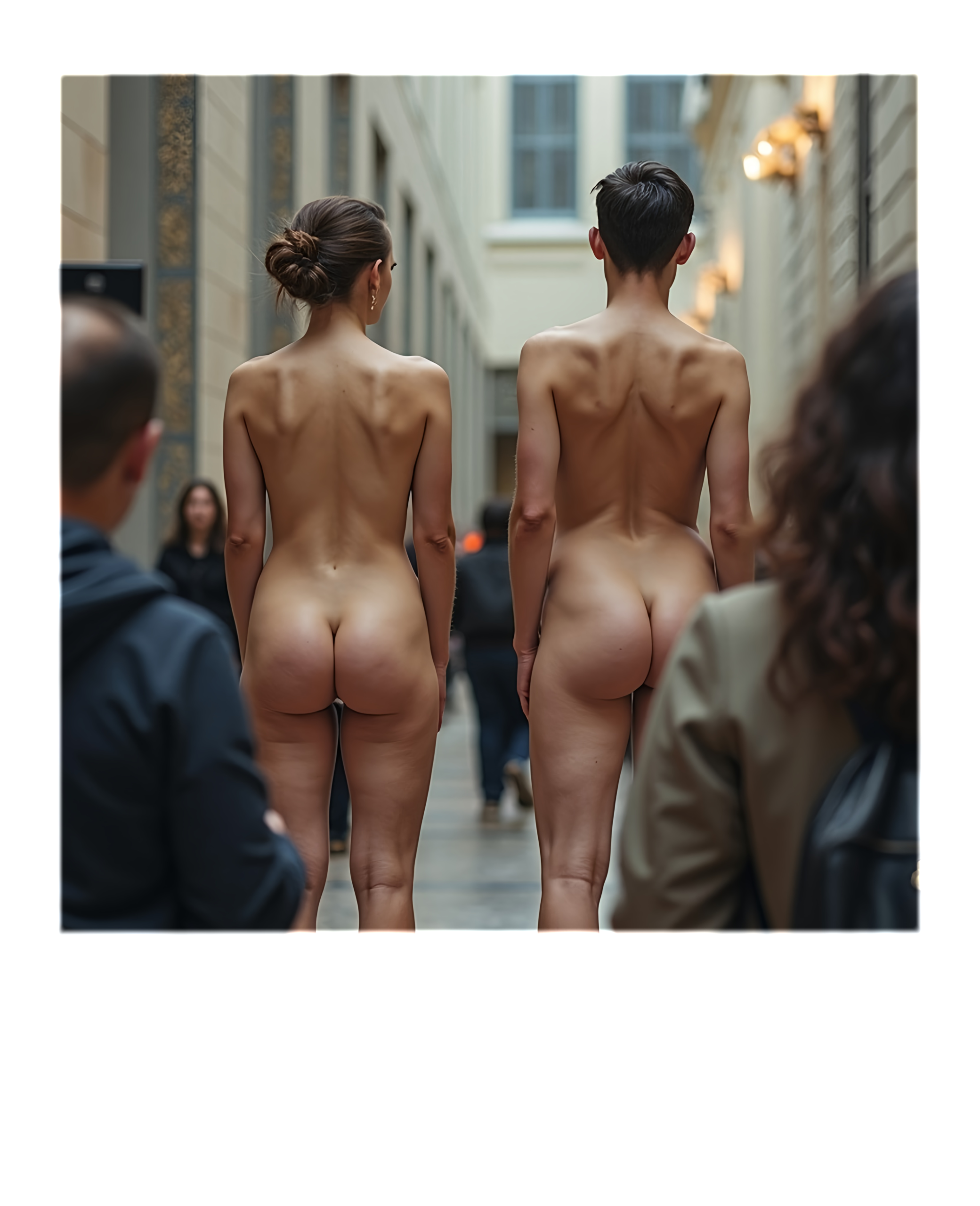
Not everyone is allowed the same ease.
Some bodies can exist without explanation. Others are asked to justify themselves before they even arrive. The difference isn’t subtle — it’s learned early, reinforced often, and rarely named directly.
Nakedness was never just about skin.
It was about permission.
Some bodies were treated as natural by default. Unremarkable. Neutral. Others were framed as disruptive the moment they appeared. Too much. Too visible. Too suggestive — even when doing nothing at all.
The rules weren’t written down, but everyone seemed to know them.
Certain shapes were celebrated. Certain ages excused. Certain genders forgiven. The same state of undress could be read as confidence on one person and impropriety on another. Context mattered less than expectation.
Performance didn’t disappear here — it intensified.
For those who weren’t granted automatic permission, nakedness became conditional. Earned through fitness, youth, symmetry, or the right kind of presentation. You could be seen — but only if you did it correctly. Only if the body apologized in advance.
And for some, nakedness was never an option at all. Their bodies were treated as political, sexual, or confrontational simply by existing. Coverage was framed as protection, but the effect was erasure. The body was allowed only when hidden.
This division wasn’t accidental.
It was cultural sorting.
The question of who gets to be naked reveals more than attitudes toward skin. It exposes who is trusted, who is centered, and who is expected to manage everyone else’s comfort.
What makes this difficult to untangle is how ordinary it feels. The rules are enforced casually — through glances, comments, dress codes, and algorithms. Rarely through direct confrontation. Often through silence.
By the time the question becomes visible, the answer has already shaped behavior.
Some people move freely without thinking about it. Others carry awareness like weight. The body becomes something to negotiate rather than inhabit. Permission is never assumed — it’s requested silently, again and again.
And so nakedness remains unevenly distributed.
Not by law.
By expectation.
Who gets to be naked is really a question about who gets to exist without explanation.
And until that question changes, the body will continue to learn its place long before it’s ever asked how it feels.