
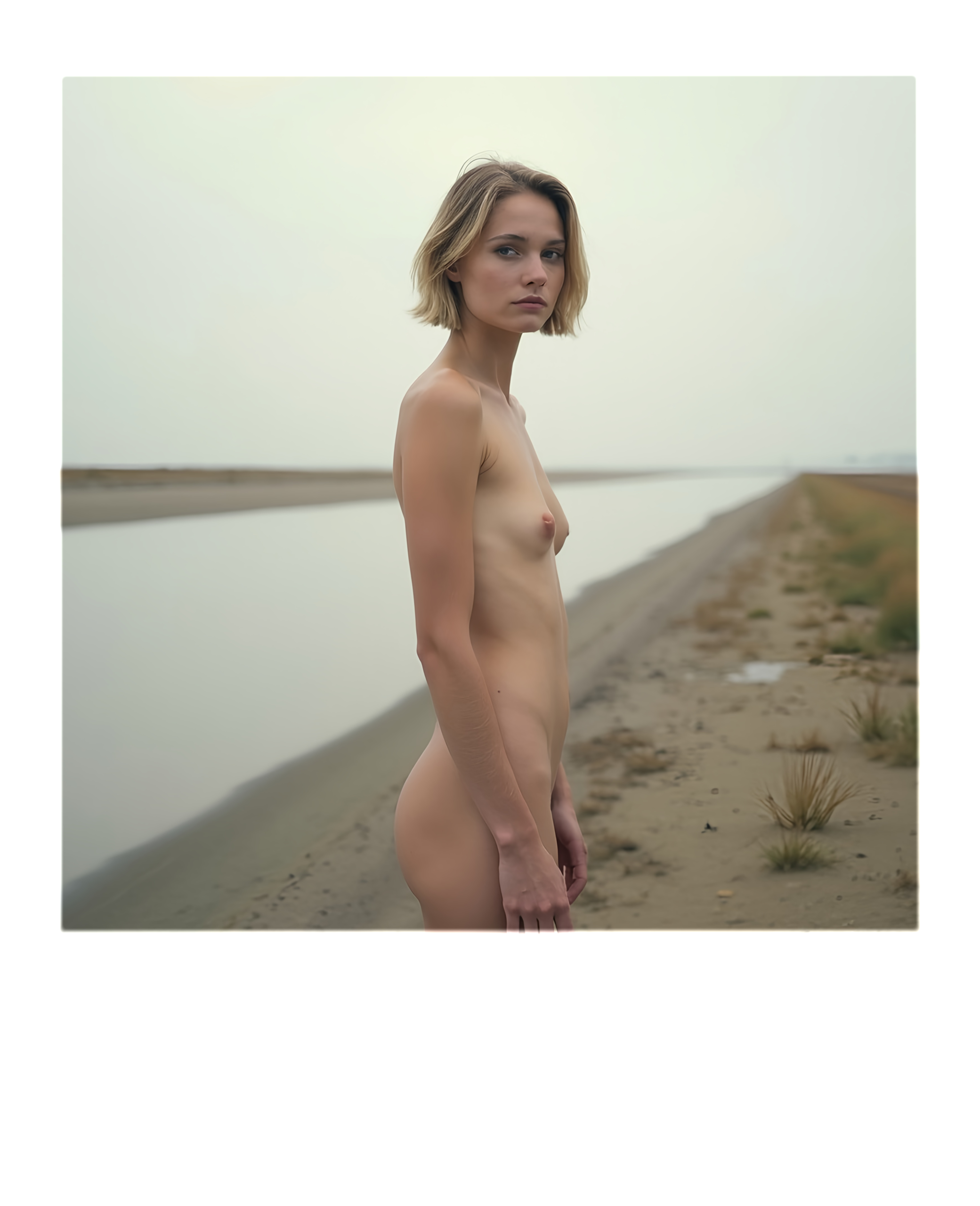
Every belief system writes its own script for the body.
Some call it sacred.
Some call it dangerous.
Some pretend it doesn’t exist at all.
But once you’ve felt your body as something honest—not sinful, not scandalous, just yours—it becomes harder to slip back into the old script. You start to notice all the ways the world still treats skin as confession and exposure as threat.
A bare shoulder becomes a statement.
A quiet confidence becomes “immodesty.”
Comfort becomes something you must justify.
It’s strange, isn’t it? How a simple body can feel radical—not because of what you’re doing with it, but because of what others were taught to fear.
Faith told some of us that flesh leads us astray.
Dreams told us that nakedness is simply our default language.
And waking life… sits somewhere uneasily between the two.
You can make peace with your body and still live in a culture that hasn’t.
You can understand that nudity isn’t inherently sexual and still step into spaces where others insist it must be.
You can feel at home in your own skin while someone else sees something provocative, rebellious, or wrong.
This isn’t conflict.
It’s contrast.
A reminder that personal truth often matures faster than cultural norms.
And the real challenge isn’t reclaiming the body—
you’ve already started that work.
The challenge is learning how to stay grounded in that truth
while moving through a world still learning to see flesh
without flinching, judging, or turning away.
Maybe that’s the quiet courage of it all:
to live in alignment with what you now know to be true,
even when the world hasn’t caught up yet.
Because sometimes the revolution isn’t loud.
Sometimes it’s simply a person choosing to live comfortably
in a body that was never meant to be treated like a threat.