
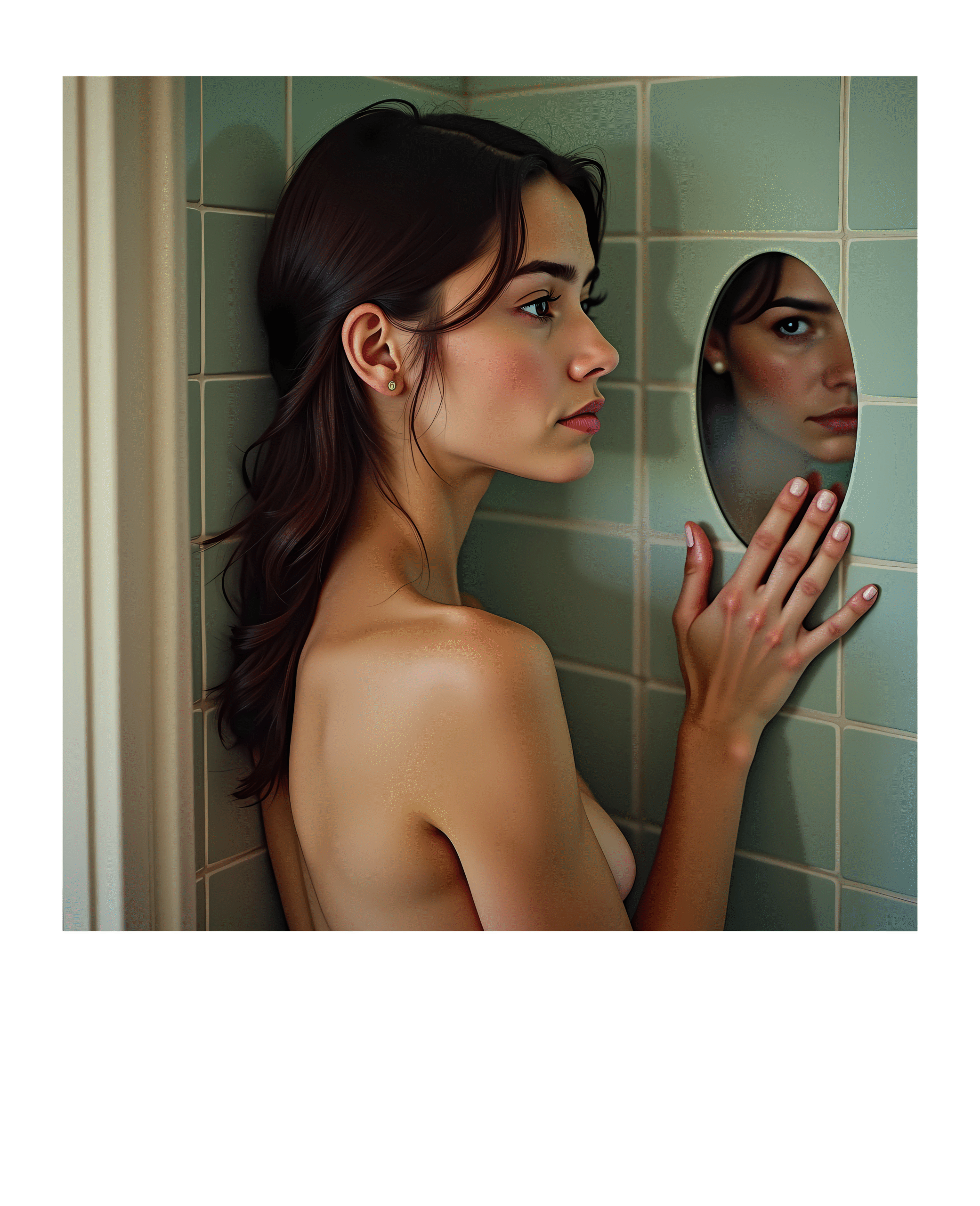
Curiosity was quiet at first.
It started in sleepovers, glances, wonder.
Nothing dramatic. Just questions we didn’t know how to ask out loud.
At first, it was innocent.
A question. A glance. A private moment.
You were curious—not performative.
You didn’t pose. You didn’t angle.
You simply explored.
Maybe it happened in a bedroom mirror.
Or during a sleepover.
Or at summer camp, changing behind a towel.
You weren’t trying to be seen.
You were trying to understand.
Then the internet answered.
But it didn’t give us comfort or clarity.
It gave us performance.
Bodies posed. Moaned. Complied. Edited.
There were no conversations—just scenes.
No questions—just categories.
And slowly, without guidance, that became our model.
Curiosity became image.
Self-awareness became comparison.
You learned which parts got laughed at.
Which got praised.
Which made others look away—or stare too long.
We didn’t see care. We saw choreography.
We didn’t see awkwardness or insecurity.
We saw power, performance, and the illusion of confidence.
Performance is what we absorbed from media—intentional, stylized, designed for effect.
Mirroring is what we absorbed from each other.
Peers. Crushes. Strangers. Everyone becoming a reference point.
Performance told us what to do.
Mirroring told us how to copy it.
You started to think:
“How do I look when I do this?”
“Am I attractive?”
“Am I enough?”
Instead of asking questions, you were performing answers.
It wasn’t your fault.
The world taught you quickly that bodies aren’t just lived in—they’re watched.
And if you were going to be watched, you had to be ready.
So many of us learned to mirror that performance.
Before we knew what we wanted.
Before we knew who we were.
Curiosity was never wrong.
But the way it was answered shaped everything that came after.