
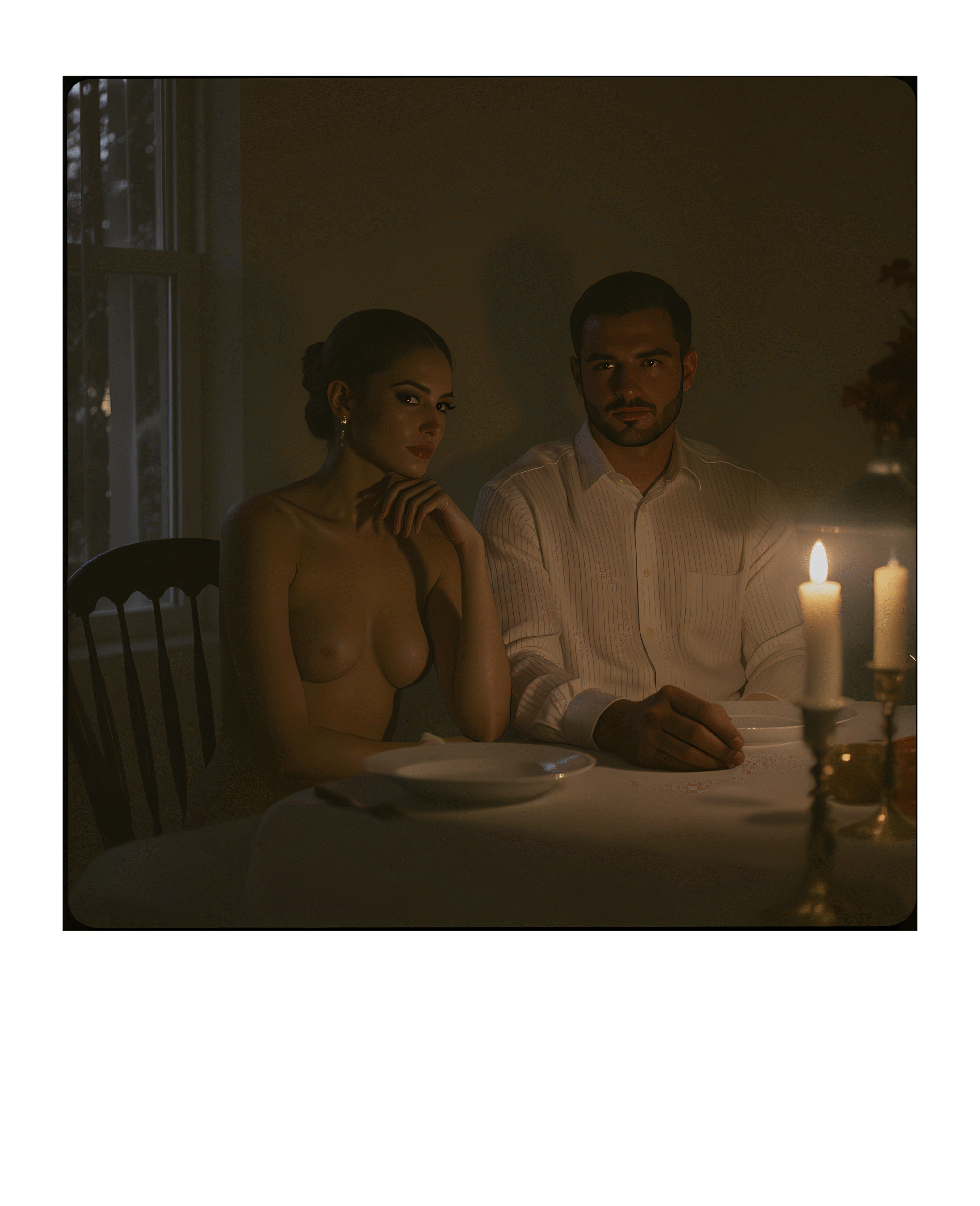
Exposure isn’t just physical. It’s emotional.
It’s the stories we tell — or don’t tell.
The opinions we swallow at dinner.
The tears we wipe away before walking into a room.
We talk about vulnerability like it’s a door you open, but often it’s a dozen tiny cracks you try to keep from spreading.
Nudity strips away fabric, yes — but intimacy strips away performance.
And that’s far harder to manage.
When someone looks at you — not just at your skin, but at your words, your contradictions, your history, your hopes — how much do you let them in?
How much of you do you trust them to handle gently?
We imagine privacy as a locked door, but more often it’s a dimmer switch.
A truth here.
A laugh there.
A confession only when the room feels soft enough.
We reveal ourselves in fragments, testing whether the world can hold what we hand it.
The paradox of nudity is this:
Sometimes it feels easier to bare the body than to bare the soul.
Skin can be seen without being understood.
But once someone sees the inner parts — the doubts, the dreams, the bruise that shaped you — there’s no pretending afterward.
No taking it back.
So the question lingers beneath every moment of connection:
When the opportunity to be seen fully arrives,
when someone reaches not for your body but for your truth —
how much do you want them to see?
And how much do you still keep behind the dimmer switch, waiting for a softer light?