
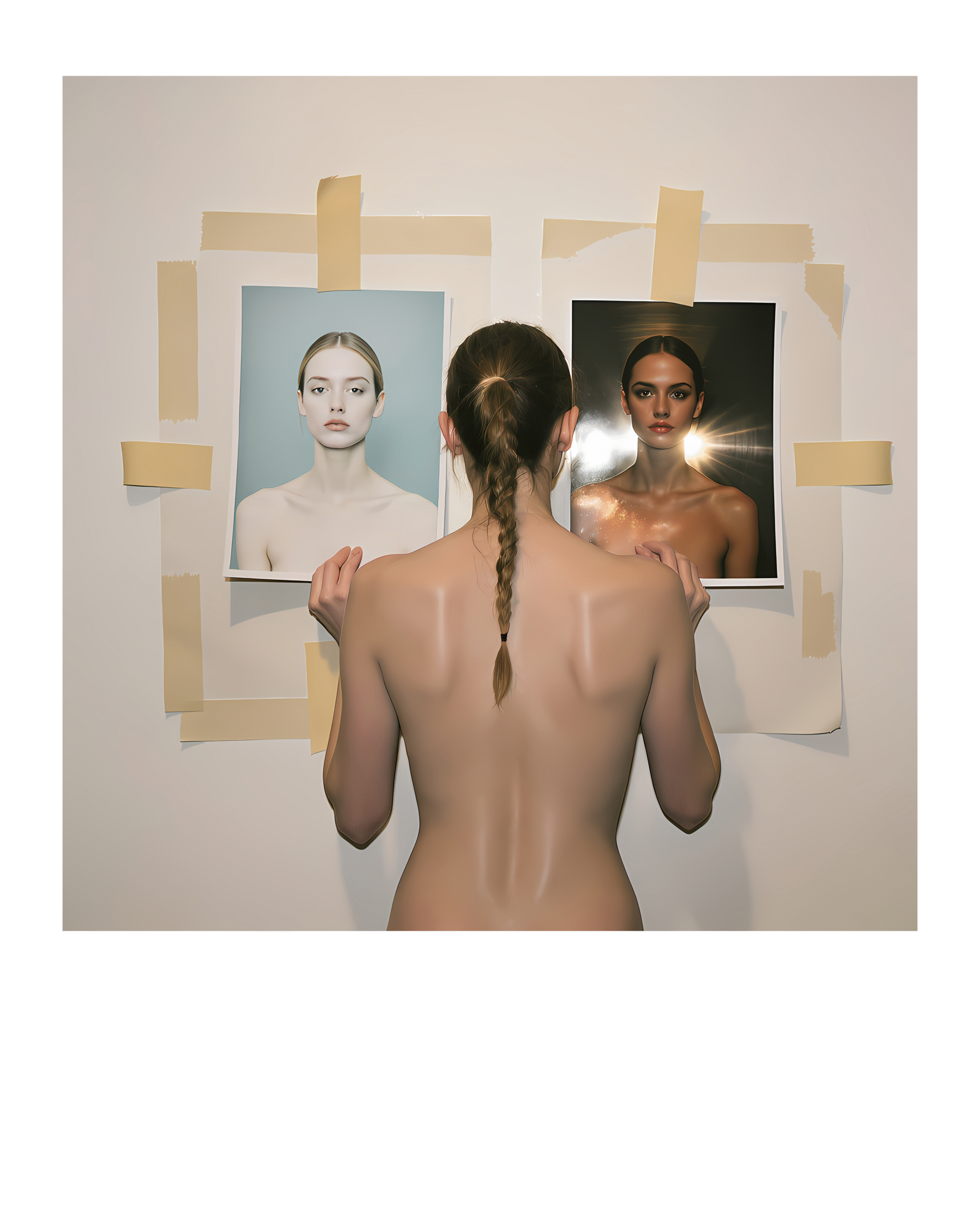
We keep trying to draw a line with pixels.
What’s allowed. What’s obscene.
Zoom in. Crop tighter. Add blur.
But the real line rarely lives in the image.
It lives in the why.
A painter studies the curve of a shoulder to learn light.
A nurse photographs a mastectomy scar to honor healing.
A brand stages a shower to sell perfume.
A stranger screenshots you to sell attention.
Same bodies.
Different compass.
Intention names the purpose: care, craft, comfort, cause, or commerce.
It tells you who is centered: the subject’s dignity, the viewer’s desire, the platform’s profit.
It sets the rules: consent spoken, audience defined, context clear.
We don’t always see intention at a glance.
Algorithms certainly don’t.
So the lazy fix is to call the body the problem.
But if we swapped the lens instead of the skin?
Ask three quiet questions:
- Why was this made? (curiosity, expression, sale, shock)
- Who agreed to it? (model, audience, no one)
- Who benefits? (subject, viewer, platform, all)
Answer those and the fog lifts.
A life-drawing pose becomes study, not scandal.
A postpartum portrait becomes testimony, not tease.
An ad becomes… an ad.
Intention won’t control every reaction.
People will still project. Platforms will still panic.
But it gives us a truer map than “nude = bad.”
Because the difference has never been the body.
It’s the story being told with it—
and whether the person inside that body is author, collaborator…
or prop.