
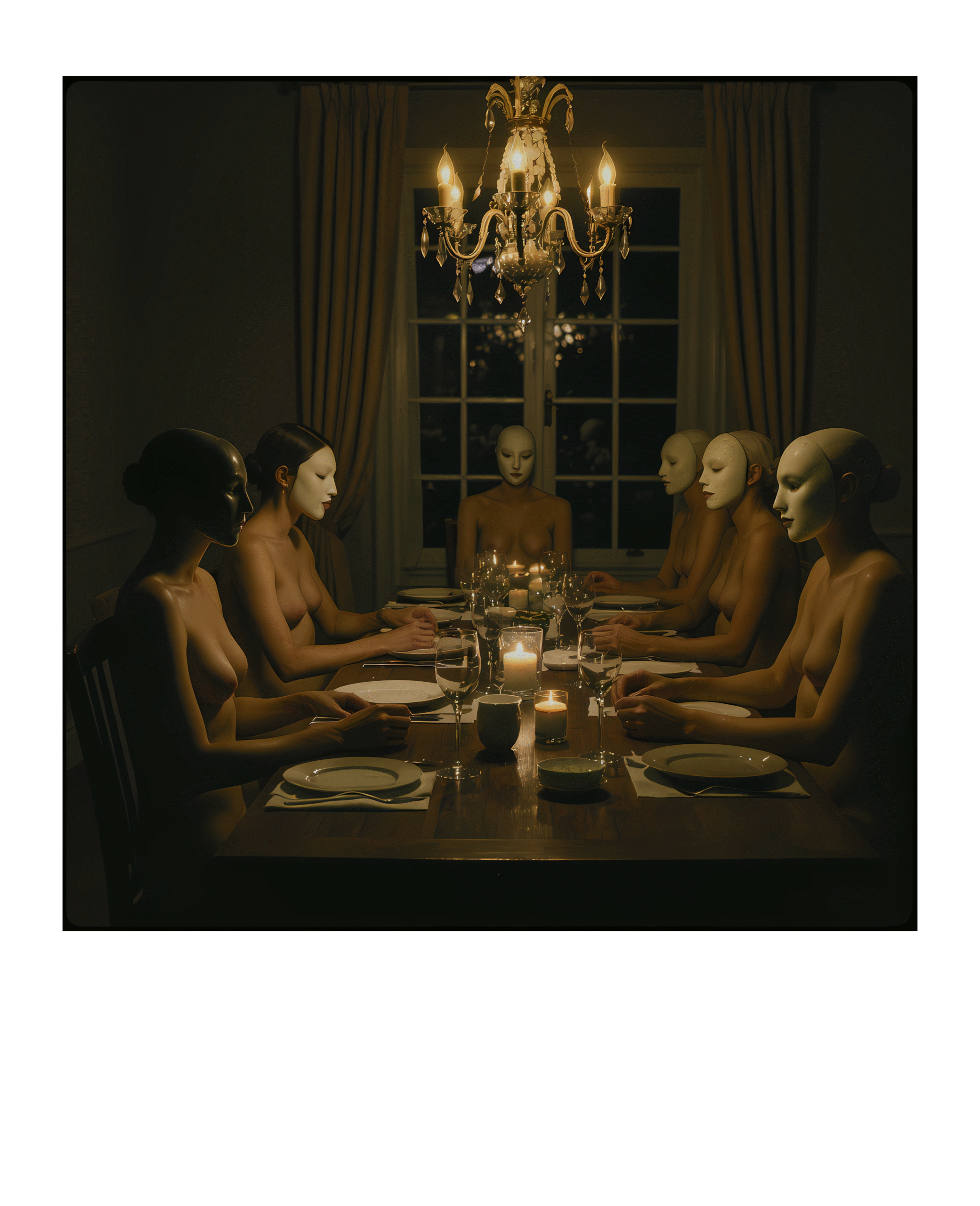
We like to imagine nudity as the great equalizer—bare skin, no armor, no act left to play.
But even without clothes, we wear masks.
The polite smile you use to survive discomfort.
The blank expression you hide behind when embarrassment burns too hot.
The posture you straighten when you want to look confident, even when something in you tightens like a knot.
These masks aren’t lies.
They’re reflexes we learned early—some from family, some from school, some from heartbreak.
They help us dodge judgment, soften impact, blend in, stay safe.
They protect the softer version of us we aren’t ready to hand to someone else.
And here’s the paradox: take off every layer of clothing, and the costumes don’t fall away with them.
The body can be bare, but the face?
It’s still performing.
A raised chin to hide fear.
A controlled breath to hide longing.
A carefully neutral expression so no one misreads the moment.
We strip down, but we don’t always show up.
Because the real exposure isn’t the skin.
It’s the tiny tremor in your voice when you speak honestly.
It’s the shift in your eyes when someone sees past your practiced calm.
It’s letting your features soften, your guard lower, your real self—not your rehearsed one—be present in the room.
And that kind of nakedness?
That takes more courage than taking off a shirt.
Maybe that’s why intimacy feels so rare.
We’re not afraid of being seen—we’re afraid of being known.
We’re afraid someone might read the truth we tuck behind the jokes, the sarcasm, the polite silence, the well-timed smile.
So the real question isn’t: Can I remove the mask?
Anyone can undress.
The question is:
Do I notice when I’m wearing a mask, and do I know when it’s finally safe to set it down?
Because the moment the face softens—when the mask slips by choice, not accident—
that’s the closest thing we have to real, human nakedness.