
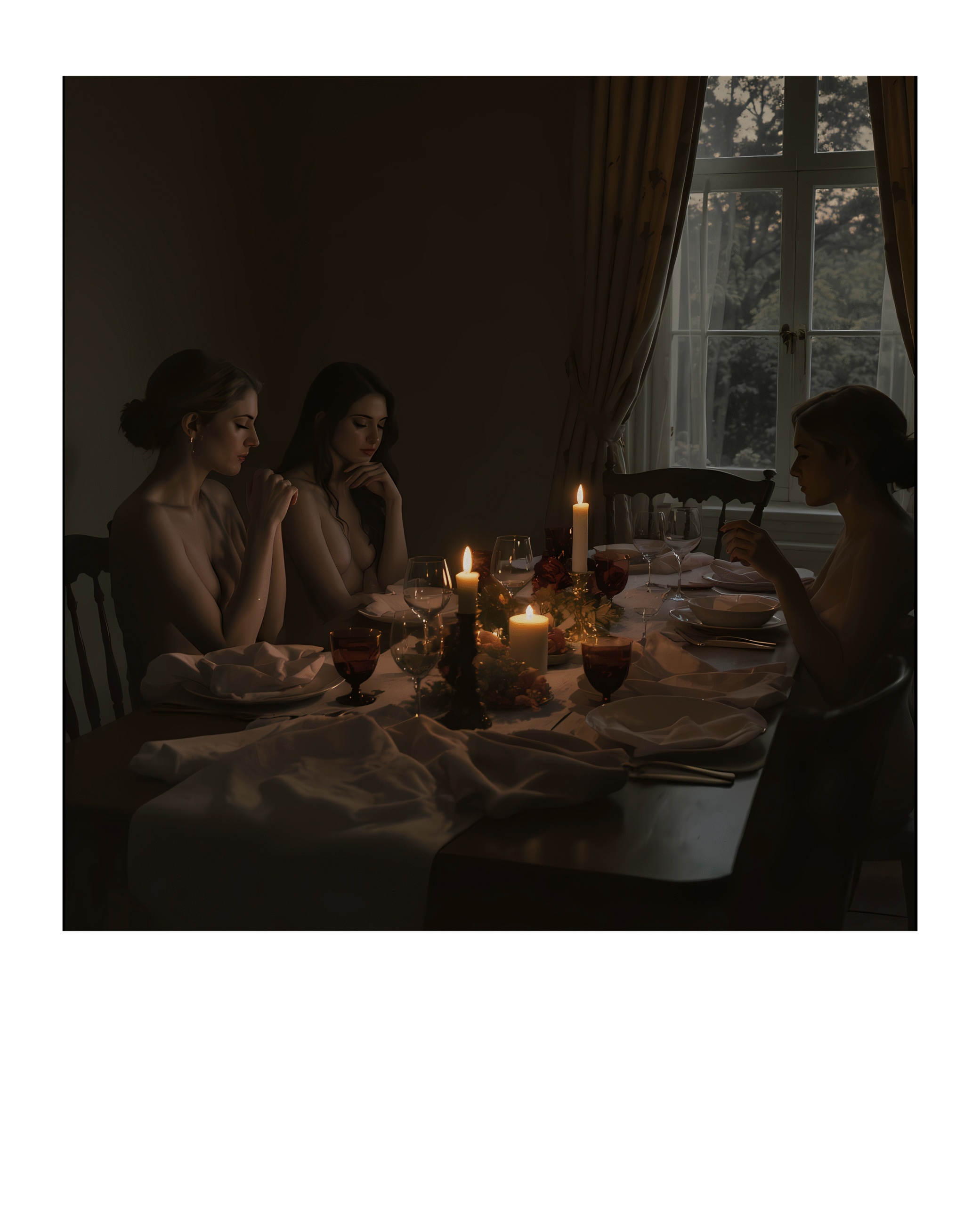
The dinner table is rarely just about food. It’s a stage for subtle glances, unspoken expectations, and invisible boundaries. Who talks. Who listens. Who interrupts. Who gets ignored. The choreography is familiar long before anyone realizes they’ve learned it.
These rules aren’t written down, but everyone absorbs them quickly. The child who speaks too boldly gets a look. The teen who brings up the wrong topic gets shut down. The adult who goes quiet stays quiet, and the meal carries on — smooth on the surface, turbulent underneath. Families know how to maintain order, even when no one knows who set it.
Family nudity — or any exposure, really — works the same way. The body itself isn’t the problem. It’s the rules about when, where, and how it’s “acceptable.” Rules no one explains, but everyone enforces through tone, silence, or a shift in the air.
We eat the food. We wear the clothes. We play the role. But beneath all of it lies the same question: what would happen if we broke the silence? If we said the thing, or revealed the part of ourselves that everyone tiptoes around?
At the table, rebellion might look like speaking your truth.
In the body, rebellion might look like refusing to cover shame that was never yours to carry.
Both risk the same thing: disrupting the order that keeps the peace—
but at the cost of presence.
Because unspoken rules can keep a family quiet, but they rarely keep a family connected.
Sometimes the real nourishment comes from the moment someone finally says,
I don’t want to follow the script anymore.